Electrical Minor Works Certificate Template
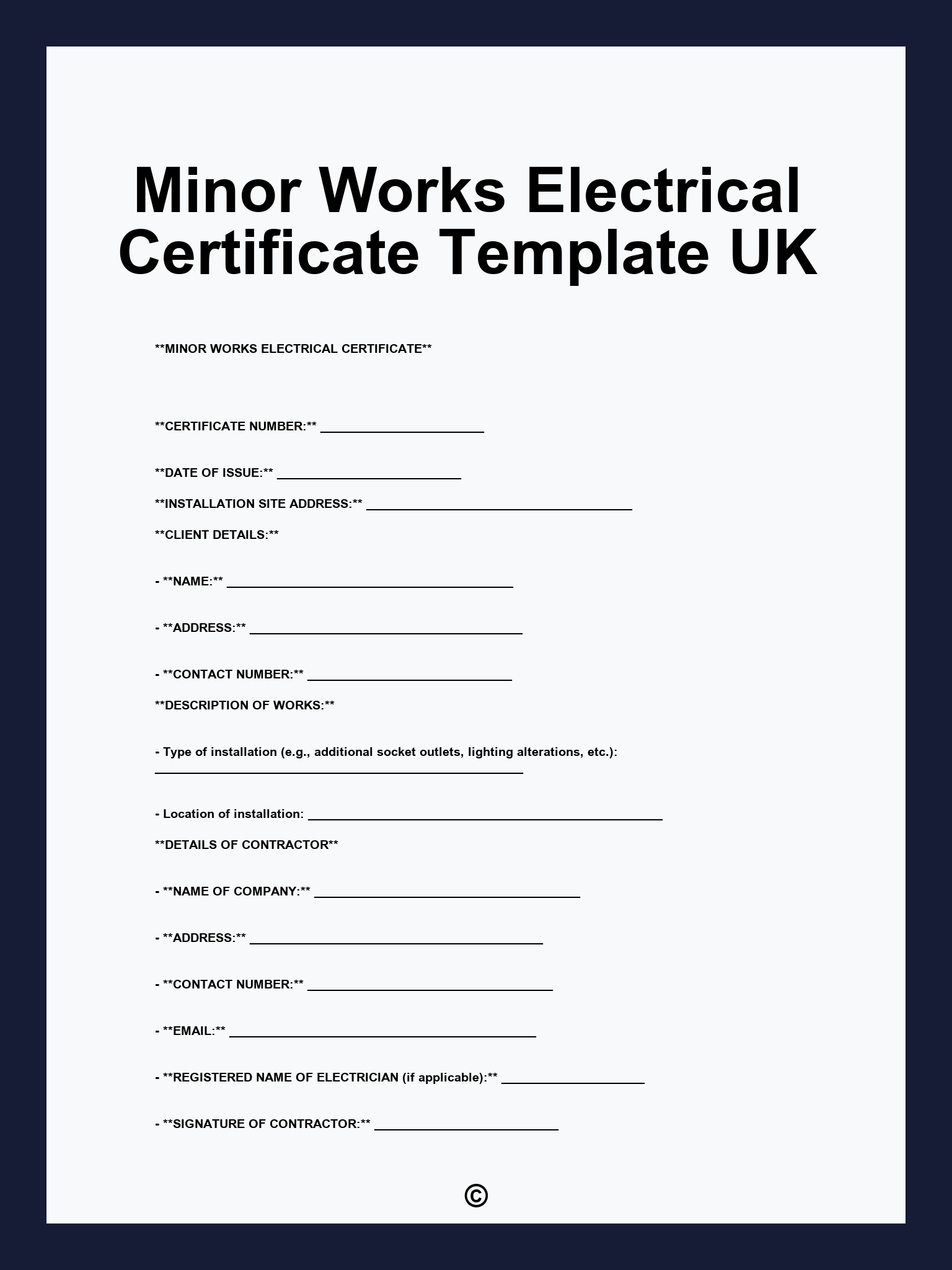
Electrical work, even seemingly small adjustments, demands adherence to strict safety standards and legal requirements. Documenting these works accurately is paramount, and a crucial component of this documentation is an Electrical Minor Works Certificate Template. This certificate serves as official confirmation that the electrical installation work has been carried out safely, competently, and in compliance with the latest regulations, such as BS 7671 (IET Wiring Regulations). Failing to provide proper certification can lead to legal repercussions, invalidate insurance claims, and, most importantly, compromise safety.
The need for certification arises from the potential hazards associated with electricity. Even minor alterations can introduce risks if not performed correctly. A properly completed certificate provides a record of the work undertaken, the tests performed, and the results obtained, demonstrating due diligence and ensuring the safety of the installation for its users. It’s not simply a formality; it’s a vital safeguard.
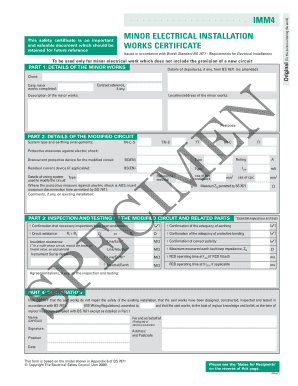
This article will delve into the specifics of electrical minor works certificates, outlining what they are, when they are required, the information they should contain, and where to find a suitable Electrical Minor Works Certificate Template. We will also discuss the responsibilities of the electrician completing the certificate and the importance of keeping accurate records.
Understanding the nuances of these certificates is essential for both electricians and property owners alike. It’s about ensuring a safe and legally compliant electrical system.

What are Electrical Minor Works?
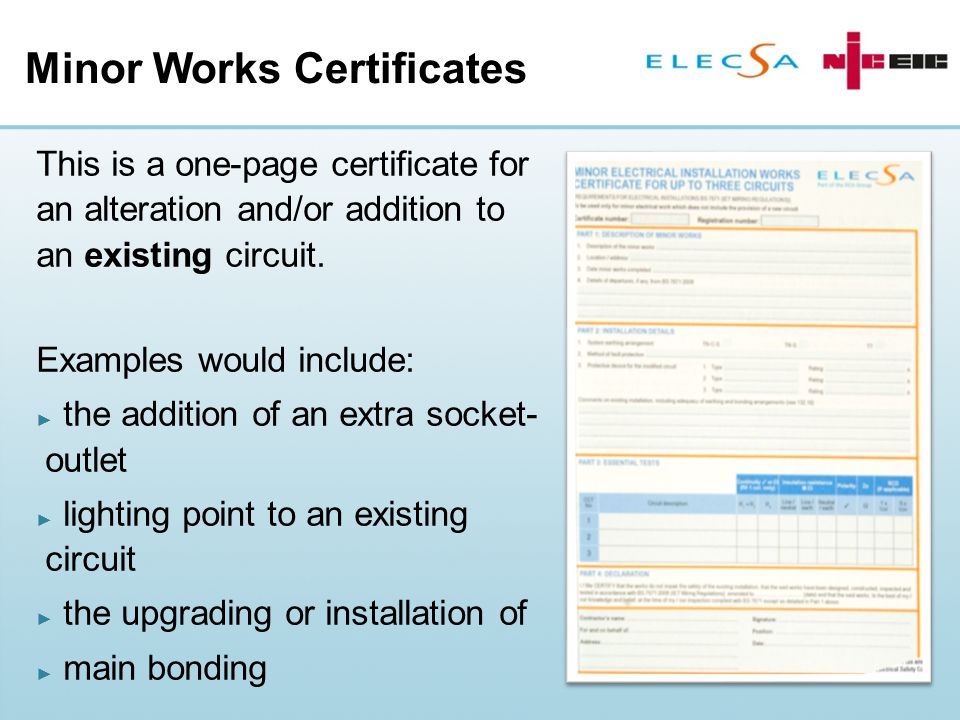
Before diving into the certificate itself, it’s important to define what constitutes “minor electrical works.” Generally, these are alterations or additions to an existing electrical installation that are considered relatively small in scope. Examples include:
Common Examples of Minor Works
- Adding a new light fitting or socket outlet.
- Replacing a light fitting or socket outlet with a like-for-like replacement.
- Replacing a fuse or circuit breaker.
- Minor alterations to existing circuits, such as extending a circuit to a new socket.
- Installing or replacing a switch.
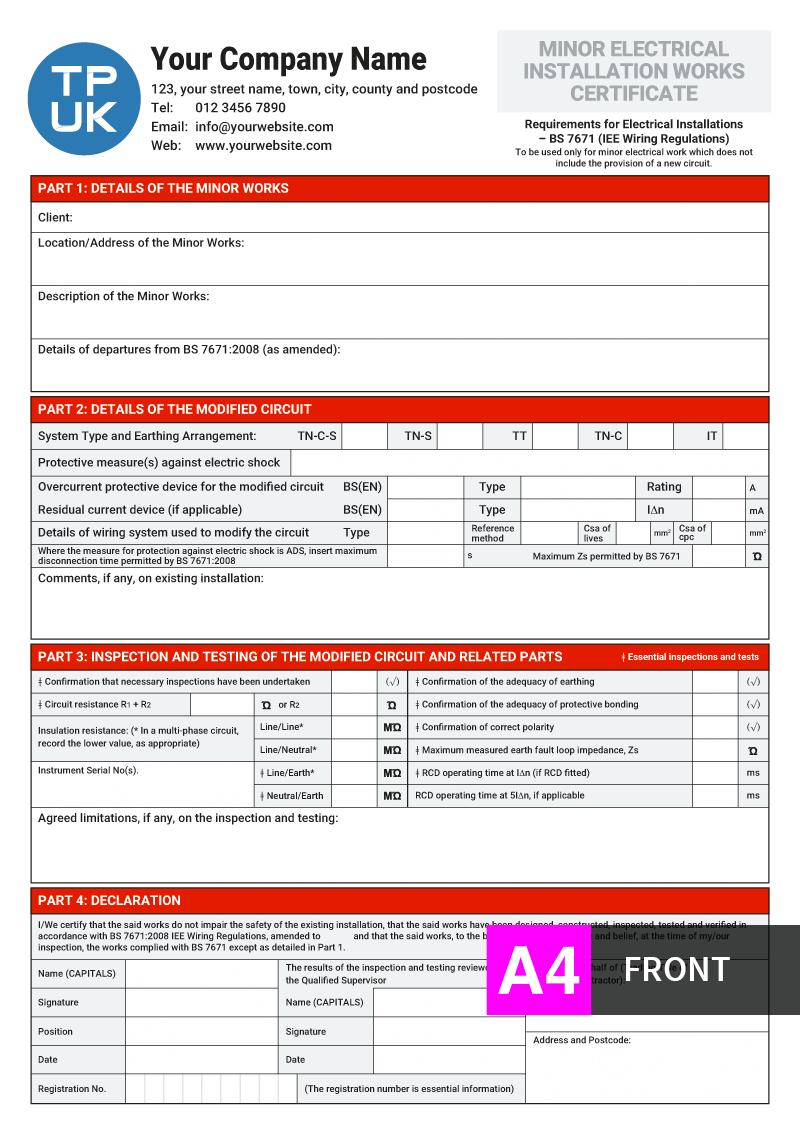
However, it’s crucial to note that the definition of “minor” can be subjective and depends on the complexity of the work and the potential impact on the overall installation. Any work that alters the fundamental characteristics of the installation, such as increasing the load on a circuit or extending the installation to a new area, is likely to require a full Electrical Installation Certificate rather than a Minor Works Certificate.
Distinguishing Minor Works from Major Installations
The key difference lies in the extent of the work. Major installations typically involve new circuits, significant alterations to existing circuits, or the installation of new electrical equipment that substantially changes the capacity or functionality of the installation. These require a more comprehensive assessment and certification process. If there’s any doubt, it’s always best to err on the side of caution and consult with a qualified electrician.

When is an Electrical Minor Works Certificate Required?
An Electrical Minor Works Certificate is legally required whenever minor electrical work is carried out in England, Wales, Scotland, and Northern Ireland. This requirement is driven by the Part P of the Building Regulations, which aims to ensure the safety of electrical installations in dwellings.

Part P Compliance
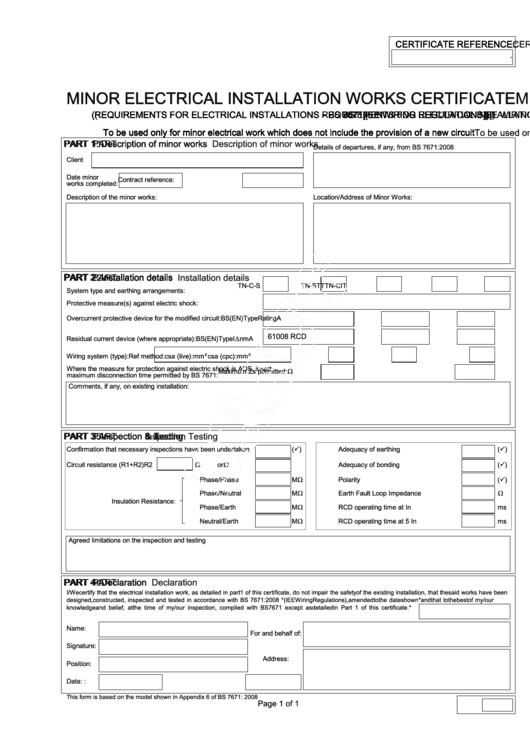
Part P applies to all electrical work in homes, including minor works. Electricians registered with a competent person scheme (such as NICEIC, NAPIT, or ELECSA) can self-certify their work, meaning they can issue the Minor Works Certificate themselves and notify the local building control body.
Unregistered Electricians
If an electrician is not registered with a competent person scheme, the work must be inspected and tested by a qualified electrician registered with a scheme, and a Building Regulations Compliance Certificate issued. This adds an extra layer of scrutiny and ensures compliance with safety standards.

What Information Should an Electrical Minor Works Certificate Include?
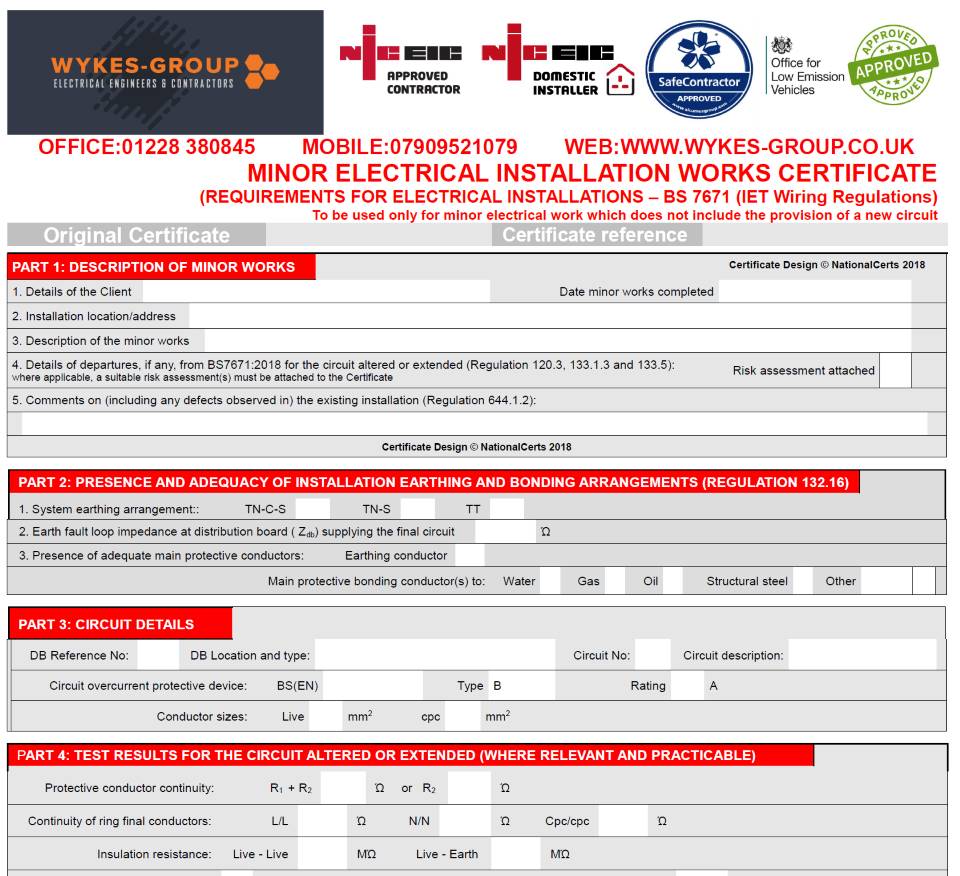
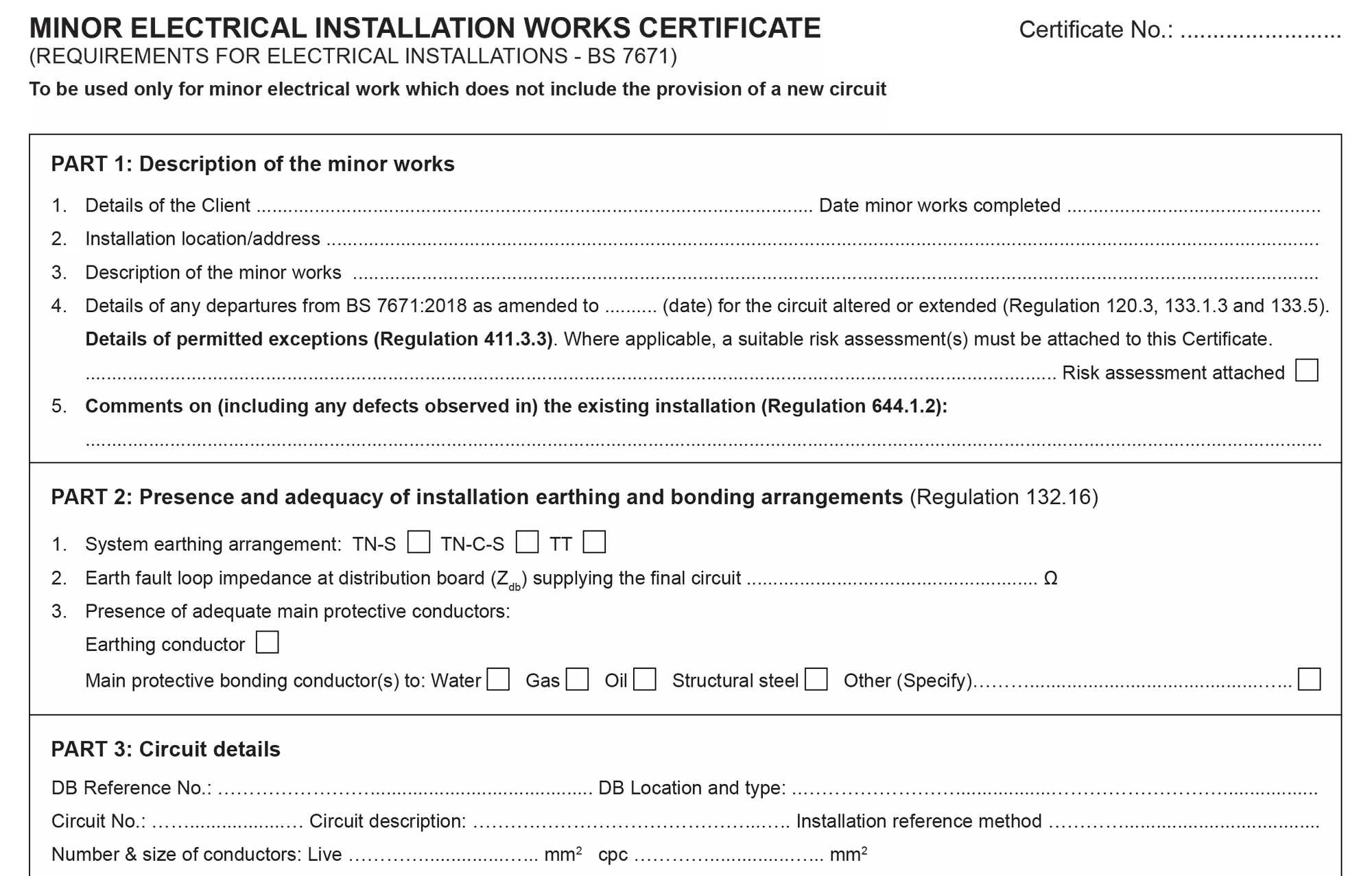
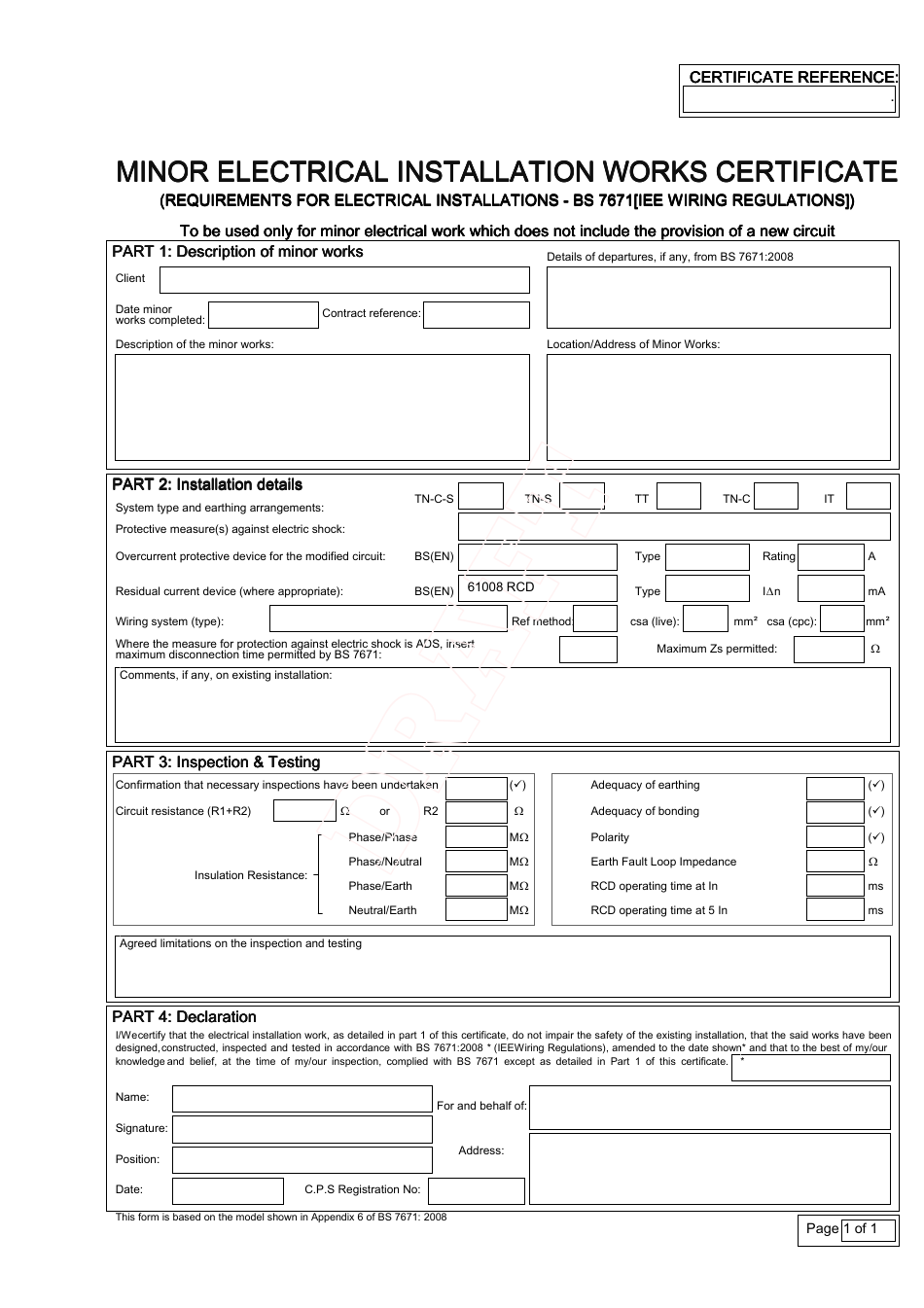
A comprehensive Electrical Minor Works Certificate Template will require detailed information to ensure a complete and accurate record of the work. Key elements include:

Essential Certificate Details
- Unique Reference Number: For traceability.
- Date of Certification: The date the work was completed and certified.
- Location of Installation: Full address of the property.
- Description of Work: A detailed description of the work carried out.
- Circuit Details: Information about the circuits affected by the work, including circuit numbers and ratings.
- Test Results: Results of the tests performed, such as insulation resistance, earth fault loop impedance, and polarity tests. These results must meet the requirements of BS 7671.
- Electrician’s Details: Name, registration number, and contact details of the electrician.
- Homeowner’s Details: Name and contact details of the homeowner.
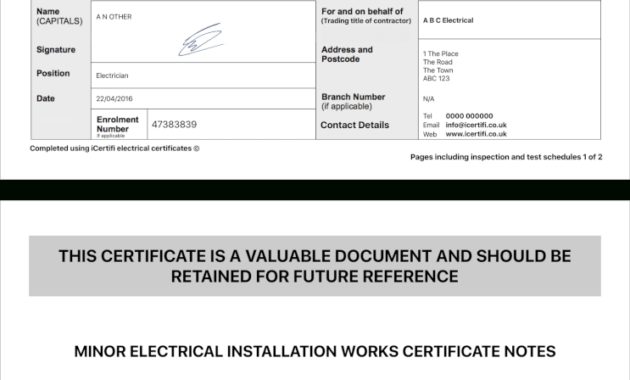
- Declaration: A signed declaration by the electrician confirming that the work has been carried out in accordance with BS 7671 and the Building Regulations.
Finding and Using an Electrical Minor Works Certificate Template
Numerous resources offer downloadable Electrical Minor Works Certificate Template options. However, it’s crucial to choose a template that is up-to-date and compliant with the latest regulations.
Reputable Sources for Templates
- NICEIC: Offers templates to its registered members.
- NAPIT: Provides templates to its registered members.
- ELECSA: Supplies templates to its registered members.
- IET (Institution of Engineering and Technology): Offers official documentation and resources.
- Online Electrical Supplies Retailers: Many retailers offer downloadable templates, but ensure they are current and compliant.
Filling Out the Certificate Correctly
Accuracy is paramount when completing the certificate. Ensure all fields are filled out completely and legibly. Pay particular attention to the test results, ensuring they meet the required standards. Any discrepancies or deviations from the standards must be clearly documented and explained.
The Electrician’s Responsibilities
The electrician completing the certificate has a significant responsibility to ensure the safety and compliance of the electrical installation.
Competence and Qualifications
The electrician must be qualified and competent to carry out the work and issue the certificate. This typically means holding a relevant NVQ or equivalent qualification and being registered with a competent person scheme.
Testing and Inspection
Thorough testing and inspection are essential to verify the safety and functionality of the installation. This includes visual inspection, insulation resistance testing, earth fault loop impedance testing, and polarity testing.
Record Keeping
Maintaining accurate records of all electrical work carried out is crucial for both the electrician and the homeowner. This includes copies of the Minor Works Certificates, test results, and any other relevant documentation.
The Homeowner’s Role
Homeowners also have a role to play in ensuring the safety of their electrical installations.
Choosing a Qualified Electrician
Always choose a qualified and registered electrician to carry out any electrical work. Check their credentials and ensure they are registered with a competent person scheme.
Receiving and Retaining the Certificate
The homeowner should receive a copy of the Electrical Minor Works Certificate after the work is completed. It’s important to retain this certificate for future reference, such as when selling the property or carrying out further electrical work.
Conclusion
The Electrical Minor Works Certificate Template is a vital document for ensuring the safety and compliance of electrical installations. Understanding its purpose, requirements, and the responsibilities of both electricians and homeowners is crucial for maintaining a safe and legally compliant electrical system. By adhering to the guidelines outlined in this article, you can help ensure that all electrical work, no matter how minor, is carried out to the highest standards, protecting lives and property. Remember to always prioritize safety and choose qualified professionals for all your electrical needs. Keeping accurate records and understanding Part P of the Building Regulations are also key components of responsible electrical maintenance.
]]>